
Why Colorado Cold Fronts Are Tough on HVAC Systems
Colorado weather is unpredictable. Whether you live along the Front Range, in the mountains, or on the Eastern Plains, cold fronts can bring rapid temperature drops, high winds, and snow within hours.
These sudden shifts put extra strain on HVAC systems especially furnaces that haven’t been properly maintained. Preparing your HVAC system before a Colorado cold front helps prevent:
- Spiking energy bills
- No-heat emergencies
- Frozen components
- Carbon monoxide risks
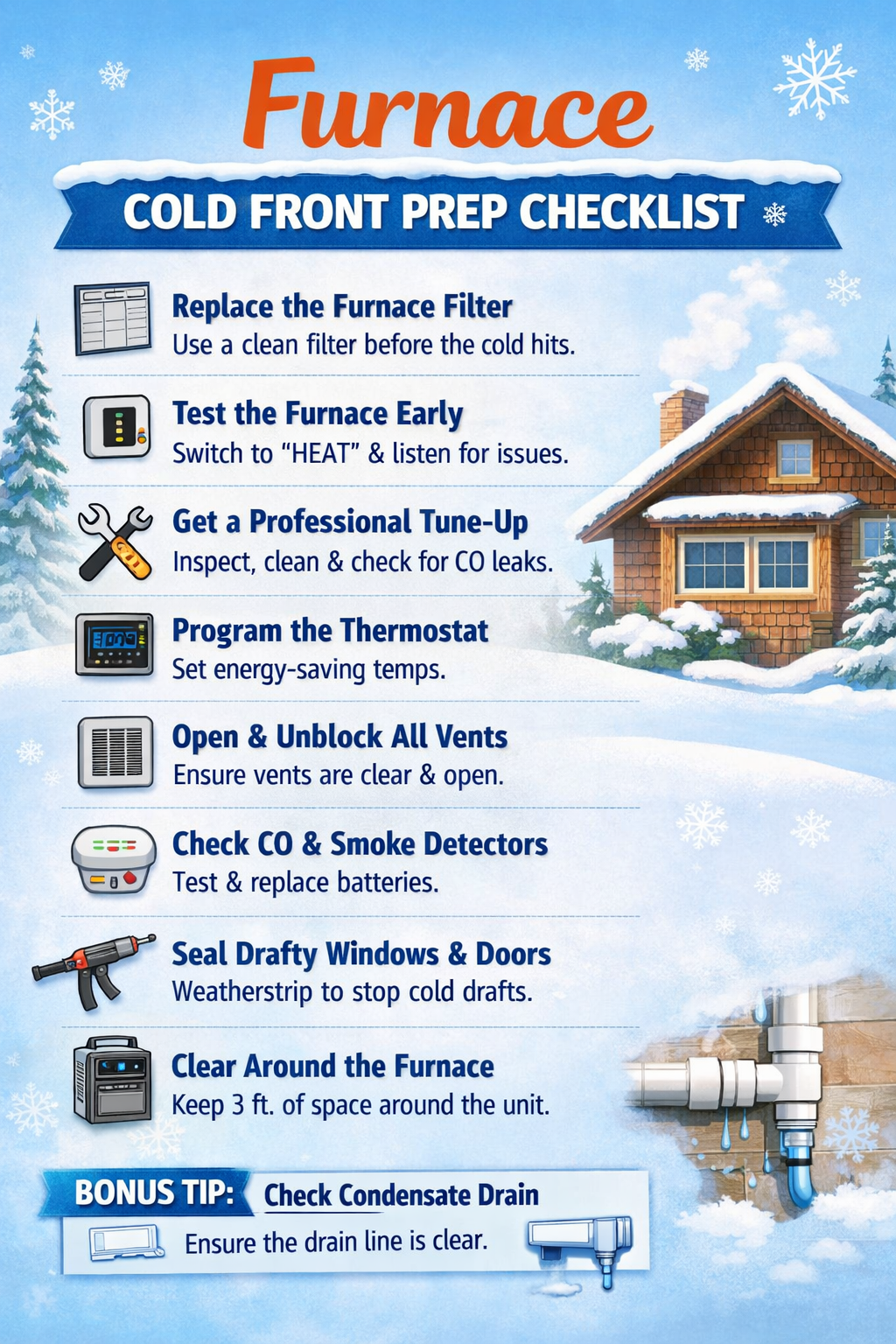
1. Replace Your Furnace Filter Before Temperatures Drop
Dirty furnace filters are one of the leading causes of winter HVAC failures in Colorado homes.
Why this matters in Colorado:
Dry air, dust, and elevation can cause filters to clog faster than expected.

- Replace filters every 1–3 months
- Use the correct size and rating for your system
- Check filters more often during winter
2. Test Your Thermostat for Cold-Weather Operation
Before the first major cold front:

- Switch your thermostat to HEAT
- Confirm the furnace turns on and cycles normally
- Replace thermostat batteries yearly
Recommended winter setting for Colorado homes:
68–70°F for energy efficiency and comfort. Smart thermostats are especially helpful in Colorado, where daytime and nighttime temperatures can vary dramatically.
3. Inspect Furnace Intake & Exhaust Pipes Outdoors
Many Colorado homes use high-efficiency furnaces with PVC intake and exhaust pipes that vent outdoors.
Cold fronts can bring:
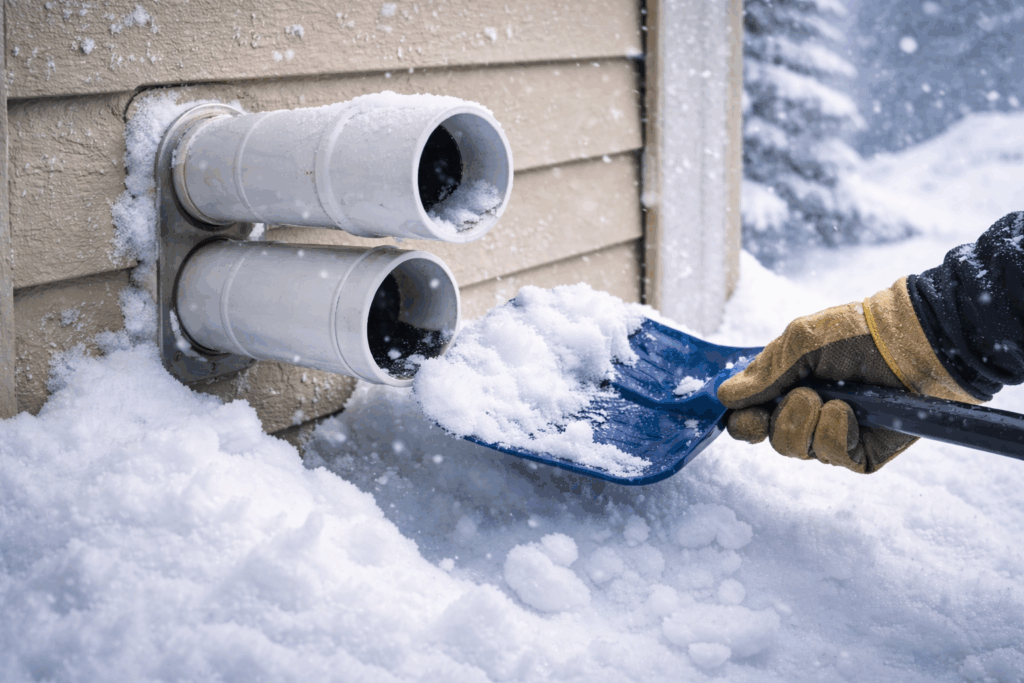
- Snow accumulation
- Ice buildup
- Wind-driven debris
Recommendations before the cold front arrives:
- Clear snow and ice regularly
- Maintain 12–18 inches of clearance
- Recheck vents after storms
Blocked vents can cause system shutdowns or dangerous carbon monoxide issues.
4. Seal Drafts & Insulate for High-Elevation Cold
Colorado’s elevation and dry climate make heat loss more noticeable.
Focus on:
- Sealing windows and doors
- Insulating exposed pipes in basements, garages, and crawlspaces
- Closing unused fireplace dampers
These steps reduce furnace workload during extended cold snaps.
5. Schedule a Professional HVAC Inspection in Colorado
A professional inspection before winter is one of the best ways to prevent emergency HVAC repairs during a Colorado cold front.
A cold-weather HVAC inspection typically includes:

- Heat exchanger safety checks
- Ignition and gas connection testing
- Airflow and efficiency verification
- System readiness for sustained cold
This is especially important for older homes, mountain properties, and high-use systems.
6. Know When to Call for Emergency HVAC Service
Contact a licensed HVAC professional immediately if you experience:

- No heat during freezing temperatures
- Loud banging, grinding, or burning smells
- Repeated furnace shutdowns
- Rising energy bills with poor heating
Emergency heating repairs are more common during Colorado cold fronts due to sudden demand spikes.
Call for Emergency Heating Repair
Prepare Now: Before the Next Colorado Cold Front
Cold fronts can move quickly across Colorado. Preparing your HVAC system early helps protect your comfort, safety, and budget throughout the winter season. A few proactive steps now can prevent costly emergency repairs later.
Schedule a Winter HVAC Inspection
Frequently Asked Questions (Colorado Homeowners)
- How early should I prepare my HVAC system for a Colorado cold front?
- Ideally 1–2 weeks before forecasted temperature drops, especially in fall and early winter.
- Do Colorado homes need more frequent HVAC maintenance?
- Yes. Elevation, dust, and temperature swings mean systems often work harder and benefit from regular inspections.
- Are cold fronts more damaging to older HVAC systems?
- Yes. Older systems are more likely to fail under sudden demand increases caused by rapid temperature drops.
0 Comments